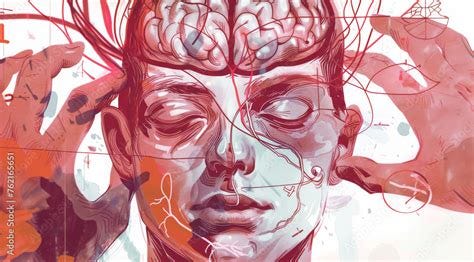
The First Word: Mind

Open any edition of the Dhammapada, the most beloved collection of the Buddha’s teachings, and this is what you find first:
Manopubbaṅgamā dhammā, manoseṭṭhā manomayā;
Manasā ce pasannena, bhāsati vā karoti vā;
Tato naṁ sukhamanveti, chāyāva anapāyinī.
Mind precedes all mental states.
Mind is their chief; they are all mind-made.
If with a pure mind a person speaks or acts,
Happiness follows them
Like a shadow that never leaves.
This is the Matthakundalivatthu, the opening story of the Dhammapada, and it is not accidental that the Buddha began here. Before any rule, any philosophy, any meditation technique—the student must understand one thing:
Everything begins with mind.
Mind Precedes
Not the world. Not other people. Not circumstances. Not fate.
Manopubbaṅgamā. Mind goes first.
When you see a tree, you are not seeing “tree.” You are seeing the mental construction of tree—shape, color, memory, association—arising in consciousness. When you feel angry, you are not experiencing “anger” as an external invader. You are experiencing a mind-state, conditioned by causes, arising and passing in its own field.
This is not idealism. It is not claiming the world doesn’t exist. It is a pragmatic, psychological truth: your experience of reality is always mediated by mind. Change the mind, and you change the experience—even while the external remains the same.
Mind is Master
Manoseṭṭhā. Mind is chief. Not in the sense of a dictator, but in the sense of a source. All dhammā—all phenomena, all states, all experiences—flow from mind. They are manomayā: mind-made, constructed, conditioned.
This is profound responsibility. If mind is the source, then the work begins here. Not with changing others. Not with rearranging the world. Not with waiting for better conditions.
With this mind. Right now.